- Mar 30
Self-Compassion in Entrepreneurship: A Skill Every Mental Performance Coach Needs
- Ashley Kuchar, Jess O’Kelly, JoAnne Bullard, Desirae Myers, and Antony Partee
Entrepreneurship is often framed as freedom, flexibility, and fulfillment – and in many ways, it is. But for early-career professionals, the reality of starting something new can feel overwhelming. Inconsistent income, difficulty finding or retaining clients, self-doubt about your competence or credibility, and watching peers excel while you’re still “figuring it out” can take a toll.
It’s common to respond to these challenges with self-criticism:
“I should be further along.”
“If I were better at this, I’d have more clients.”
“Maybe I’m not cut out for entrepreneurship.”
There is a better way. We can learn to approach setbacks and challenges in a way that supports both our well-being and our business. Self-compassion, as defined by Dr. Kristin Neff, has three core components:
Mindfulness: noticing difficulty without minimizing or exaggerating it.
Common humanity: recognizing that struggle is part of the shared human experience.
Self-kindness: responding with understanding and clarity, rather than harsh self-judgment.
Self-compassion is a powerful tool for sustainable growth, both personally and professionally. It’s not just about offering encouragement and understanding when things are hard, it’s also about protecting your energy and taking purposeful action to move forward.
Because entrepreneurship is inherently challenging, the most valuable lessons come from real experiences. By sharing our own struggles as mental performance coaches and the self-compassion strategies that helped us navigate the messy, unpredictable moments of building a business, we hope to offer practical strategies you can apply in your own journey, along with insight and inspiration from people who have been there.

Jess: A steadier practice started with three questions
https://www.jessokelly.com/ | info@jessokelly.com
Instagram: @jess_okelly | LinkedIn: Jess O'Kelly
In the early stages of building my practice, I was running my business part-time. I juggled multiple roles and my client flow was unpredictable. I tried to use evenings to market, but often felt too drained to promote myself, or even think clearly. I felt pulled to be useful to everyone (athletes, youth, parents, teams, performers) and kept trying to package what I’d been taught into an “offer” that sounded credible. Without realizing it, I slipped into a familiar loop: scattered marketing, self-criticism, comparison, and the constant refrain of “I should be further along.”
What shifted things for me was an understanding of self-compassion as more than reassurance. It is also a way of protecting your energy and choosing the next right action. When an inquiry didn’t convert or I’d had a quiet week, I’d feel the sting and my mind would want to go straight to self-criticism. The kind part of self-compassion helped me meet that moment with understanding. The fiercer part of self-compassion helped me move. I’d pause and come back to three questions:
What’s actually hard here?
What do I need?
What’s the most helpful next step?
Those three questions turned a wobble into something workable, and they helped me see I wasn’t just battling unpredictable inquiries. I was trying to grow a practice without a clear framework to guide the work or communicate it with confidence. Early on, I relied on the classic “mental skills” toolkit and my CBT training: useful, but often reactive. With perfectionistic athletes carrying shame and self-criticism, insight didn’t always translate into emotional change. Naming that gap helped me get specific about what I needed to grow: a framework that matched how I work, a client niche I’m genuinely suited to serving, and a way of practicing that felt sustainable rather than performative.
From there, I made more intentional entrepreneurial choices. I looked back at what had shaped me most: my early work in the prison service, where I saw how powerful compassion-focused approaches can be when shame and self-criticism are driving behavior, and later work with young people and families, which reinforced the value of early intervention. I realized I was still searching for a self-compassion approach that translated cleanly into performance environments.
That’s when I discovered the RESET program, a six-session, sport-designed self-compassion intervention that teaches athletes how to reset after mistakes and setbacks, and build mental flexibility under pressure. For me, RESET provided a framework I could trust, practical tools I could use straight away, and a community of practitioners to keep refining the skills. Once I had an intervention that genuinely fit, the next entrepreneurial question became much easier: who do I most want to serve with this? The answer felt like a full-circle moment: youth athletes, with early intervention at the center, alongside the parents and coaches who shape the environment around them. When my framework, clientele, and values lined up, marketing began to feel less like self-promotion and more like a clear invitation to the right people.
The outcome wasn’t overnight confidence or a suddenly “full” schedule, but it was steady and sustainable. I stopped treating quiet weeks as a verdict on my worth and started using them as feedback: protect my energy, get clear, and take the next helpful step. I had a clearer framework to use in sessions, a message I could articulate simply, and a stronger sense of who I can best serve. Over time, that clarity built into a full caseload of aligned clients and a marketing approach that feels like an honest expression of my values. More importantly, self-compassion became a cornerstone of my work with young athletes (and the adults around them): meeting pressure with honesty rather than harshness and choosing a constructive next step. If you’re building a practice and feeling scattered or stuck, come back to those three questions: what’s actually hard here, what do I need, and what’s the most helpful next step?
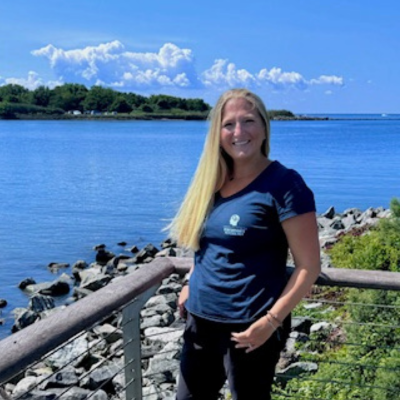
JoAnne: “Some days being a working mom feels like an easy walk on a wide balance beam, but some days it feels like a tightrope.” - Dr. Elizabeth Coronado
www.absolutefitnesspsychology.com | absolutefitnessllc@gmail.com
Instagram: @drjoannebullard | Facebook: @Absolute Fitness: Performance Psychology | LinkedIn: www.linkedin.com/in/joanne-bullard
I have always felt grateful for the opportunity to pursue a career that I am truly passionate about and excited to take part in every day. As a Certified Mental Performance Consultant (CMPC), I have been fortunate to work with amazing athletes, performers, coaches, teams, and parents, helping them achieve their goals and unlock their potential. The excitement of being an entrepreneur for me is centered on flexibility, making my own business decisions, and implementing my own philosophy, grounded in mindfulness.
One challenge for me has been maintaining a balance between my work and personal life. As a mother to four children who are exploring their own athletic journeys and activities, I have found it challenging to establish boundaries, adjust schedules, and be fully present. When you run your own business, there’s not always a clear “off switch.” Emails and texts are always coming through, ideas spark at random points in the day, and there is a constant feeling that I need to complete just one more thing before the end of the day.
As my kids get busier, I am struggling to establish consistent work hours centered around my kids' games and activities (my non-negotiable) - especially when they get rescheduled! I’ll never forget how proud I was to schedule my clients around one of my daughter’s playoff games and how excited I was to see her play. The morning of the scheduled game, parents received a message that the game had been rescheduled to the next day, which was the day I had scheduled my clients, since it was initially free. I remember feeling defeated and guilty on both ends – asking clients to reschedule their sessions due to something that was personal to me, but also how guilty I would feel about missing my daughter’s game. I know it might just have been one game, but for me, it is important to be at as many of her games as possible.
This scenario has happened multiple times throughout my career and is always challenging for me to navigate. My default response has always been self-criticism. I told myself I needed to be better at time management or more efficient with scheduling, but athletes don’t have a 9-5 schedule! Embracing that mindset only left me feeling frustrated, defeated, and burned out.
Practicing self-compassion helped me step back and recognize that these struggles of maintaining work/life balance weren’t personal failures - they were part of the reality of entrepreneurship. Instead of judging myself, I started acknowledging how demanding this season of my life is and how fulfilled I felt, both personally and professionally. I leaned into my support system, expressing my thoughts and feelings, and also connected with other parents in the same position. Having that support and connection towards others allowed me to realize I am not alone in this journey.
From that compassionate mindset, I have begun implementing strategies, including setting work hours centered around my kids’ schedules, building buffer time into my schedule, and identifying non-negotiable moments to be present with my family. Even with the best of intentions, I am more open to understanding that days won't always go as planned. When schedules change, I focus on learning rather than critiquing myself. Self-compassion has enhanced my journey as an entrepreneur by helping me connect with others, become more mindful in my responses, and treat myself with the same understanding I offer others.

Desirae: When the plan fell apart, I found my path
https://p4performancepsychology.com/ | desirae@p4performancepsychology.com
Instagram: @p4performancepsych | Facebook: P4 Progress over Perfection: Performance Psychology | LinkedIn: desirae-myers-m-s
In the first year of my graduate program, I had a plan. Everything was mapped out: pursue a doctorate, become a sport psychologist, end of story. But after a heart-to-heart with my mentor, everything shifted. I realized I needed to follow an authentic path, not just the one that looked best on paper.
Soon, I was applying to another master’s program without knowing exactly what was next. Not long after, I started a sport psychology business while pursuing my second master’s degree. As the first in my family to earn a college degree, let alone pursue multiple graduate degrees, and the first to start a business from scratch, the pressure felt heavy.
Now, only months away from graduating, my once perfectly organized plan feels like it’s gone up in flames. A close friend joked that every time I make a plan, the universe laughs. And honestly, it felt true. Nothing has unfolded the way I imagined.
Balancing a business, full-time school, and working in a region where mental health – and especially sport psychology – is still misunderstood hasn’t been easy. I’ve often felt like I’m not doing enough, and worse, that what I am doing isn’t good enough.
That’s where self-compassion came in. I teach athletes to stay present, trust the process, and focus on what they can control, yet I realized I wasn’t offering myself the same grace. Self-compassion became self-care. It meant accepting that I can’t be everything to everyone and learning to refill my own cup so I can truly show up for my clients. It meant that I needed to prioritize my therapy, my community, and learning what it means to show up for myself.
I’m still learning that success doesn’t always look like the plan you started with. Sometimes growth comes from letting go of the timeline, trusting the process, and permitting yourself to be human along the way. It could even mean you actively redefine what it means to be successful. And maybe the real lesson is this: even when the plan changes, you’re still exactly where you need to be.
Sometimes, self-compassion is recognizing that you don’t have to have everything figured out. Sometimes, self-compassion is being kind to yourself as you watch not your first, not your second, but even your third plan go up in flames. Sometimes, self-compassion simply means allowing yourself to be a work in progress.

Antony: From sidelines to startup, and why self-compassion is an entrepreneur’s competitive edge
soundmindperformance.com | antony@soundmindperformance.com
LinkedIn: linkedin.com/in/antonypartee
For more than 20 years, I lived, professionally, inside the structure of collegiate basketball. Practices were planned. Goals were defined. Roles were clear. There was accountability, routine, and (while not guaranteed) some level of professional security. Then I stepped into the world of mental performance entrepreneurship. Almost overnight, I went from a world of clear expectations and steady income to unanswered emails, inconsistent momentum, and long stretches of doubt. Outreach didn’t always lead to clients; effort didn’t always lead to results; and progress was rarely obvious. I knew I had the credentials and decades of experience working with athletes and coaches, but entrepreneurship doesn’t care about how long I’ve coached or how many seasons I’ve survived. It was only interested in what’s working right now for the business.
As a result, I defaulted to what coaching culture taught me best: push harder, grind longer, and demand more of myself. This approach worked on the court, but not in business; it left me exhausted, discouraged, and quietly questioning whether I was good enough. I thought “I didn’t sign up to be an entrepreneur in the first place. I signed up to help people become the best version of themselves.” Yet here I was, after my best efforts, not feeling like a successful mental performance entrepreneur. What I didn’t realize at the time was that my dissatisfaction didn’t come from a lack of effort. It came from a lack of self-compassion.
The coaching culture at the intercollegiate level taught me how to be demanding, accountable, and relentless, but it never really taught me how to be kind to myself when growth is not obvious or evident. After much prayer, reflection and meditation, I recognize that being uncomfortable puts me in a position to grow and be free. I needed to use the values and guidance in my work with others for myself. I began to recognize and refine my lack as an opportunity to create my own blueprint in the mental performance entrepreneurship world. I started to focus on what I value and who I am in this space. I became more compassionate, patient, kind, and understanding towards myself. Instead of being critical of my challenges from a place of demand, I embrace them from a place of rest. I began to use self-compassion tools for myself as an entrepreneur. I saw an immediate difference in my approach to the business side of mental performance, which enhanced my effectiveness and performance as both an entrepreneur and a consultant. I quickly learned that the same self-compassion skills I want to give to my clients, I had to first give them to myself.
One of the most practical self-compassion tools I rely on is the mindful pause, which I use in real time during moments of stress, self-criticism, or entrepreneurial uncertainty. In practice, this begins by intentionally slowing down and bringing attention to my breathing and emotions without trying to fix, judge, or push them away. Then, I use the power of touch by placing a hand on my chest and taking a deep breath. Finally, I normalize the experience by reminding myself that entrepreneurship can sometimes be uncomfortable, that this is a difficult moment, and that such moments are common. I acknowledge where I am and affirm that I have the strength to endure. This practice isn’t about lowering my standards or expectations; it’s about changing the tone of the inner voice so growth can occur without shame.
From my professional experience, self-compassion doesn’t make entrepreneurship easier, but it does make it viable, doable, and worthwhile. Self-compassion has allowed me to keep showing up without burning out. It has helped me refine my approach instead of abandoning my purpose. It has grounded me emotionally so that I could build relationships authentically and not desperately. Most importantly, I noticed that the more compassionate I became with myself, the more grounded and effective I became with my clients.
Ultimately, I’ve learned that growth happens best in environments of psychological safety, not harsh judgement. That belief now anchors how I move through entrepreneurship. Three principles guide me daily: the mindful pause, so I respond instead of reacting; mentorship, because no one builds anything meaningful alone; and running your race, a reminder that comparison steals clarity and momentum.
Entrepreneurship is not a sprint; it’s not even a single season – it’s a process of becoming. Speaking as a coach and consultant, I believe that self-compassion isn’t a soft skill but a necessary performance skill. When we pause, reflect, and give ourselves permission to grow without shame, we don’t merely survive entrepreneurship, we build something meaningful, sustainable, and deeply aligned with who we truly are.
Entrepreneurship will stretch you. It will test your confidence, your clarity, your patience, and your resilience. The four stories shared here are unique, but they point to a common truth: growth is not built on self-criticism. It is built on awareness, compassion, and courageous next steps.
Self-compassion does not remove the challenges of entrepreneurship. It changes how you meet them. It allows you to acknowledge what is hard without turning against yourself. It helps you protect your energy, refine your direction, and keep moving forward with intention rather than shame.
As mental performance professionals, we teach athletes how to respond to mistakes, pressure, and uncertainty. Entrepreneurship asks us to practice those same skills ourselves. When we do, we not only sustain our businesses, we model the very mindset we hope to cultivate in others.
You do not have to have everything figured out. You do not have to be further along. You only have to meet this moment with honesty, compassion, and the willingness to take the next helpful step.
Want to learn more about self-compassion? Check out these resources for continued learning and community.
Self-Compassion in Sport & Performance Special Interest Group (SIG): A professional space for members of the Association for Applied Sport Psychology (AASP) who are interested in research, application, and dialogue around self-compassion in performance settings.
Self-Compassion Institute with Dr. Kristin Neff: Workshops, guided practices, and research-based resources for cultivating self-compassion (not sport-specific).
RESET Instructor Training: Get certified to teach the evidence-based RESET program and bring self-compassion to athletes in a practical, accessible way. Designed for therapists, coaches, and mental performance professionals. Practical tools, ongoing support, and a community to help you grow your practice. For additional information, connect with Dr. Ashley Kuchar via email, Instagram, Facebook, or LinkedIn.